
INTRODUCTION
Digital systems have become essential for everyday business operations. Organizations use websites, cloud platforms, email systems and databases to manage important information.
As businesses become more dependent on technology, protecting digital information becomes increasingly important.
Cybersecurity is not only a technical responsibility. It is an ongoing business practice that involves people, processes and technology.
UNDERSTANDING COMMON CYBERSECURITY RISKS
Phishing is one of the common methods used to trick individuals into revealing confidential information.
Attackers may send messages that appear to come from trusted organizations and encourage recipients to open suspicious links or attachments.
Weak passwords are another important security risk. Reusing the same password across multiple services can increase the impact of an account compromise.
Outdated software may also contain security weaknesses that attackers can attempt to exploit.
STRONG PASSWORDS AND MULTI-FACTOR AUTHENTICATION
Businesses should encourage employees to use unique and strong passwords for important accounts.
A password manager can help users maintain different passwords without needing to remember every credential.
Multi-factor authentication adds another verification step when accessing an account.
Even if a password becomes exposed, an additional authentication requirement can make unauthorized access more difficult.
SECURING WEBSITES AND WEB APPLICATIONS
Web applications should be developed using secure coding practices.
User input must be validated on the server side. Database queries should use safe parameter binding or an ORM to reduce SQL injection risks.
Applications should also protect against cross-site scripting, cross-site request forgery and unauthorized access.
Sensitive pages must be protected using proper authentication and authorization checks.
Passwords should never be stored as plain text. Secure password hashing should always be used.
THE IMPORTANCE OF DATA BACKUPS
A reliable backup strategy can help organizations recover from accidental deletion, hardware failures and certain cyber incidents.
Businesses should maintain regular backups and periodically test whether those backups can actually be restored.
Backup copies should be protected from unauthorized modification and access.
A backup that has never been tested should not automatically be considered a reliable recovery solution.
EMPLOYEE SECURITY AWARENESS
Employees are an important part of an organization security strategy.
Regular awareness sessions can help employees recognize suspicious emails, avoid unsafe downloads and report unusual account activity.
Organizations should establish clear procedures for reporting suspected security incidents.
ACCESS CONTROL AND MONITORING
Every employee should receive access only to the information and systems required for their responsibilities.
This principle is commonly known as least privilege.
Organizations should review user permissions periodically and remove access when it is no longer required.
System logs and security monitoring can also help identify unusual activities.
CREATING A SECURITY PLAN
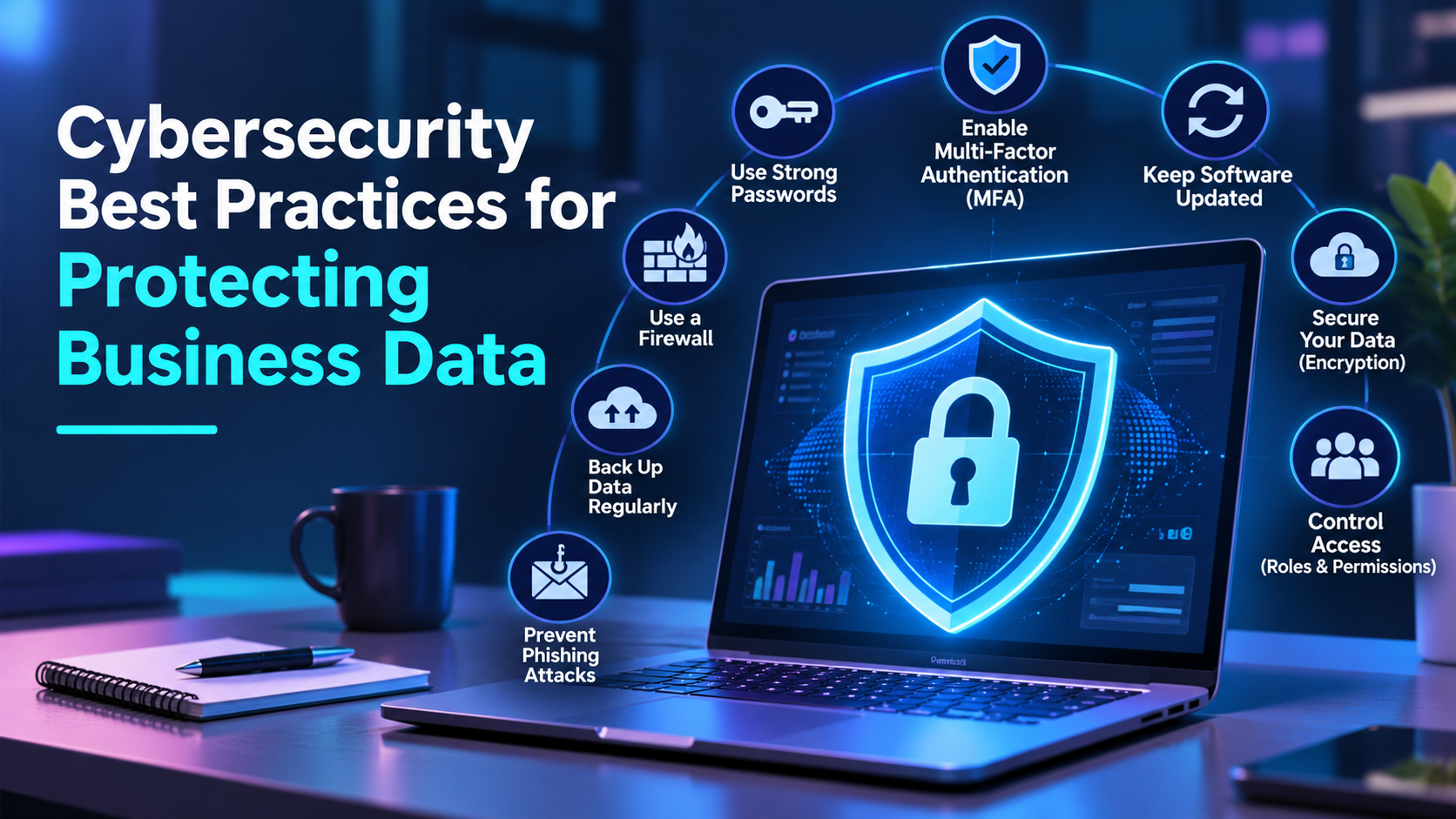
A practical cybersecurity plan should include risk assessment, secure authentication, regular updates, tested backups, employee training and incident response procedures.
Small businesses can begin by protecting their most important accounts and systems before gradually improving their security processes.
CONCLUSION
Cybersecurity is a continuous responsibility that requires attention and regular improvement.
Strong authentication, secure development, reliable backups and informed employees can significantly improve an organization security posture.
Protecting digital assets is an important part of building customer trust and maintaining dependable business operations.