
INTRODUCTION
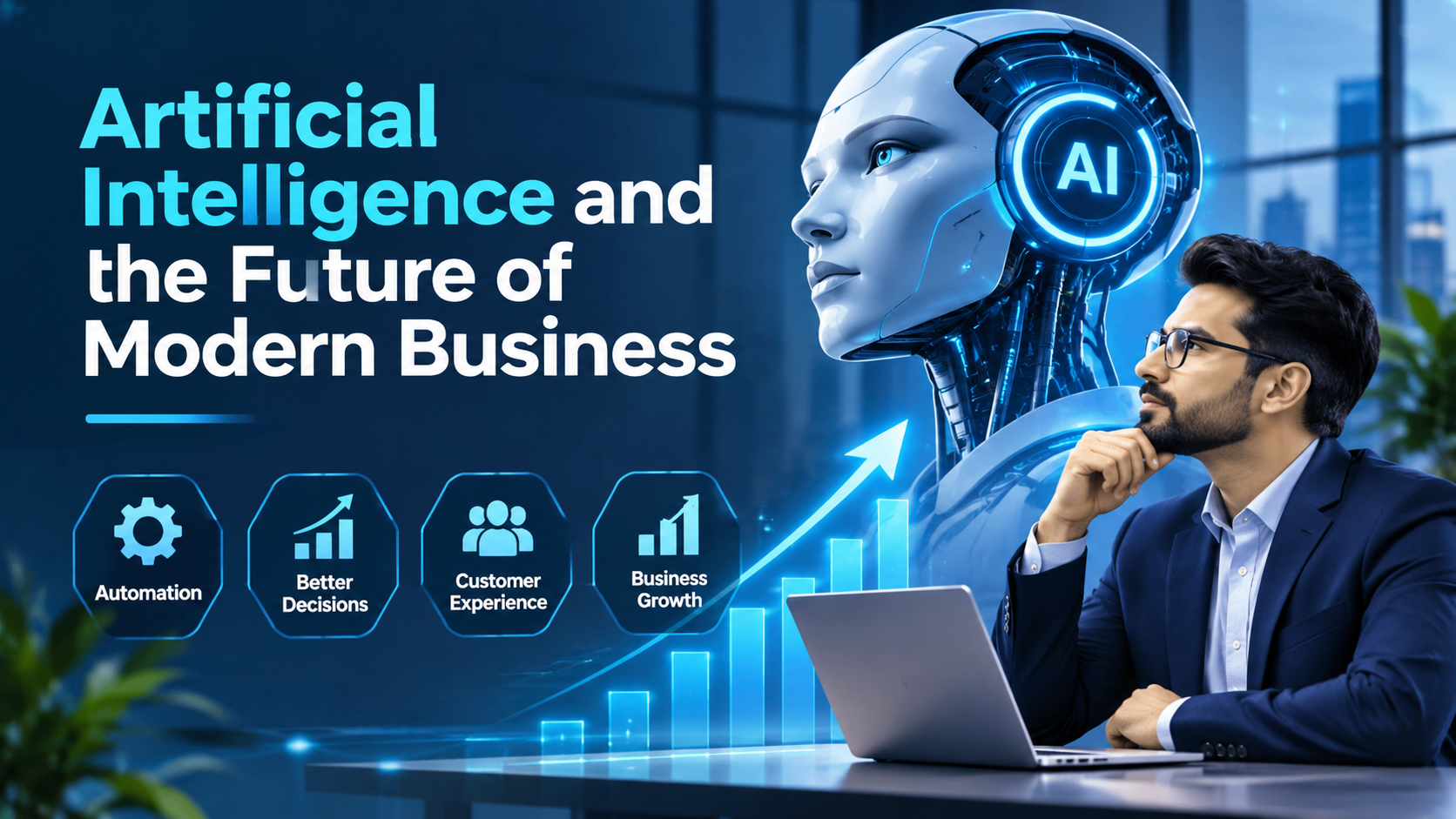
Artificial Intelligence has become one of the most influential technologies in the modern digital world. Businesses across different industries are exploring AI to improve productivity, automate repetitive processes and make better decisions using data.
Unlike traditional software that follows only predefined instructions, AI-powered systems can analyze information, recognize patterns and support tasks that previously required significant human effort.
HOW AI IS TRANSFORMING BUSINESS
One of the most important applications of AI is business process automation. Organizations can use intelligent systems to process documents, organize information, answer common customer questions and generate reports.
AI-powered customer support tools can help businesses respond to frequently asked questions more efficiently. These systems can operate continuously and direct complex enquiries to human support teams.
Another important application is predictive analytics. By analyzing historical information, businesses can identify patterns, understand customer behavior and make more informed decisions.
MACHINE LEARNING AND DATA ANALYSIS
Machine learning is a branch of artificial intelligence that allows computer systems to identify patterns from data.
For example, an online business can analyze purchasing patterns to understand which products customers are interested in. A service organization can study historical support requests to identify common operational problems.
However, the quality of AI results depends heavily on the quality, accuracy and relevance of the information used.
AI IN SOFTWARE DEVELOPMENT
Artificial intelligence is also changing software development workflows.
Developers can use AI-assisted tools for code suggestions, documentation, testing support and identifying potential issues. These tools can improve development productivity, but human review remains essential.
Software architecture, security decisions and business requirements still require careful professional judgment.
CHALLENGES AND RESPONSIBLE AI
Although AI offers significant opportunities, organizations must also consider privacy, data protection, accuracy and security.
Businesses should avoid sharing confidential information with unapproved AI services. They should review automated outputs and maintain human oversight for important decisions.
Responsible AI adoption requires clear policies, appropriate data management and regular evaluation.
HOW BUSINESSES CAN GET STARTED
A practical approach is to begin with a small business problem rather than adopting AI simply because it is popular.
Organizations can identify repetitive tasks, evaluate suitable tools, run a controlled pilot and measure the results.
Once the benefits are understood, successful solutions can be gradually expanded across other workflows.
CONCLUSION
Artificial Intelligence is becoming an important part of digital business transformation. It can help organizations improve efficiency, understand information and develop better customer experiences.
The most effective approach is to combine intelligent technology with human expertise, responsible practices and clear business objectives.
At OmyWaveTech, we believe that modern technology should solve real problems and create meaningful digital opportunities.