
INTRODUCTION
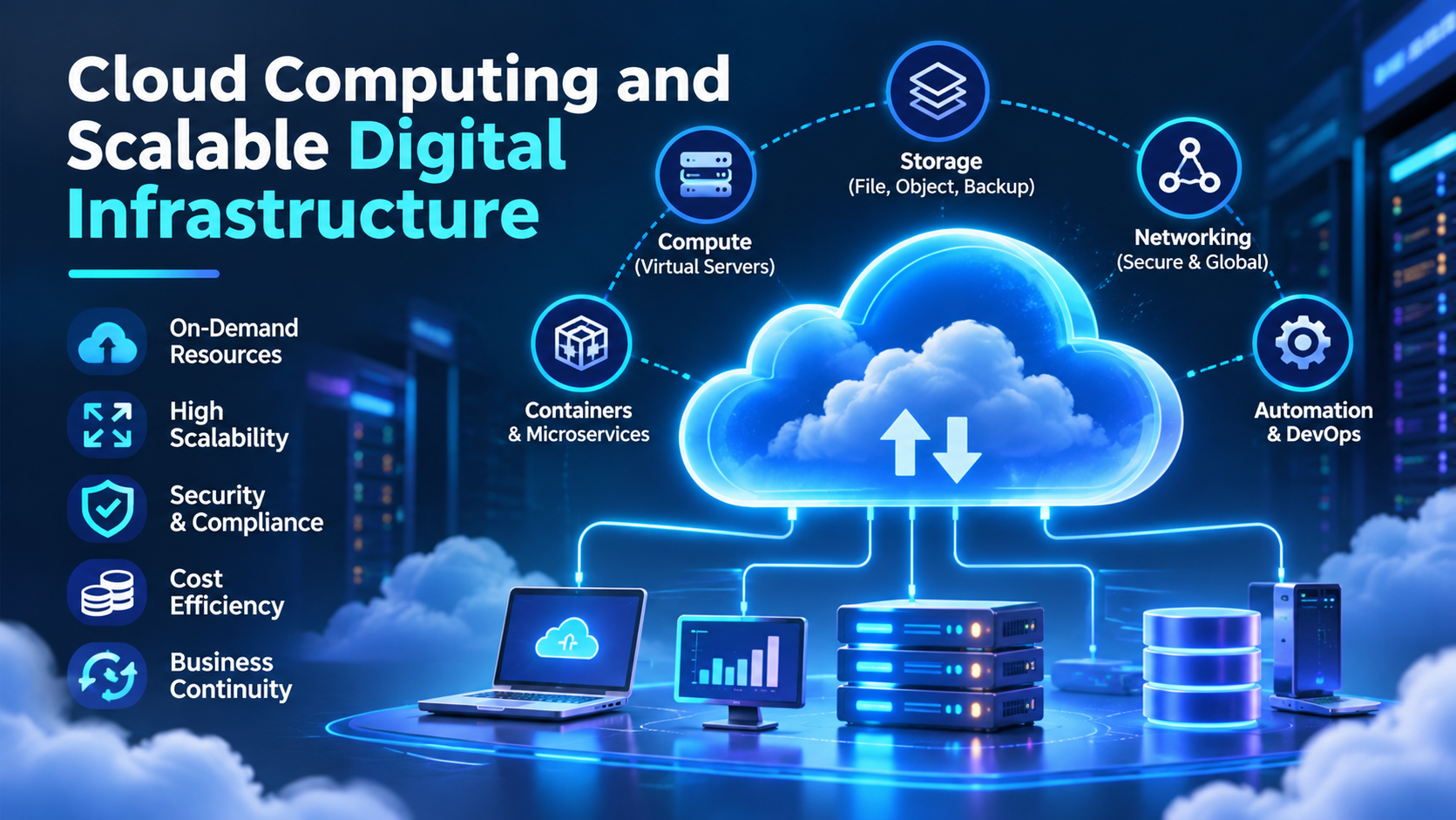
Cloud computing has changed how organizations access and manage technology infrastructure.
Instead of maintaining every computing resource locally, businesses can use cloud services to access servers, storage, databases and application platforms over a network.
This approach can provide flexibility and help organizations adapt infrastructure according to changing requirements.
WHAT IS CLOUD COMPUTING?
Cloud computing is a model for delivering computing resources as services.
Organizations can use cloud infrastructure to host websites, store application data, run software and manage computing workloads.
Cloud services are commonly offered through different service models.
UNDERSTANDING CLOUD SERVICE MODELS
Infrastructure as a Service provides computing resources such as virtual servers, storage and networking.
Platform as a Service provides a managed environment for developing and deploying applications.
Software as a Service provides ready-to-use software through the internet.
Each model offers a different level of management and control. Businesses should select a model according to their technical requirements and internal capabilities.
CLOUD DEPLOYMENT MODELS
Public cloud infrastructure is operated by a cloud provider and shared across customers through logically separated environments.
Private cloud infrastructure is dedicated to a particular organization.
Hybrid cloud combines private infrastructure with public cloud resources.
The right deployment model depends on security requirements, regulatory obligations, performance needs and budget.
SCALABILITY AND PERFORMANCE
One of the important advantages of cloud infrastructure is the ability to adjust computing resources according to workload requirements.
For example, an application may require additional capacity during periods of high traffic.
Scalable architecture can help applications handle changing demand without requiring every resource to remain permanently at peak capacity.
However, scalability requires careful application design, database planning and performance monitoring.
CLOUD SECURITY AND DATA PROTECTION
Moving systems to the cloud does not remove the need for security.
Organizations should configure access permissions carefully, protect sensitive information and maintain secure application configurations.
Encryption, identity management, backups and security monitoring are important parts of cloud operations.
Businesses should also understand the security responsibilities shared between themselves and their cloud providers.
COST MANAGEMENT
Cloud services can reduce the need for certain upfront infrastructure investments, but unmanaged cloud usage can create unexpected costs.
Organizations should monitor resource consumption, remove unused services and select appropriate resource sizes.
Regular cost reviews help businesses understand infrastructure spending and identify opportunities for optimization.
PLANNING A CLOUD MIGRATION
A successful migration should begin with an assessment of existing applications, databases and infrastructure.
Businesses should identify dependencies, security requirements and possible downtime risks.
Testing should be performed before production migration.
A gradual migration approach may reduce operational disruption and provide opportunities to resolve issues before the complete transition.
CONCLUSION
Cloud computing provides organizations with flexible options for hosting applications and managing digital infrastructure.
However, successful cloud adoption requires thoughtful planning, security controls, cost management and ongoing monitoring.
Businesses should choose infrastructure according to their actual requirements rather than following technology trends without a clear objective.